

How AI Is Shaping the New World
Explore how artificial intelligence is transforming healthcare through advanced diagnostics, telemedicine, personalized treatment, and smarter patient care. Discover the innovations shaping a more efficient and connected medical future.
نُشر في 20 أكتوبر 2026 · حُدّث في 2 نوفمبر 2026 · 12 دقيقة قراءة
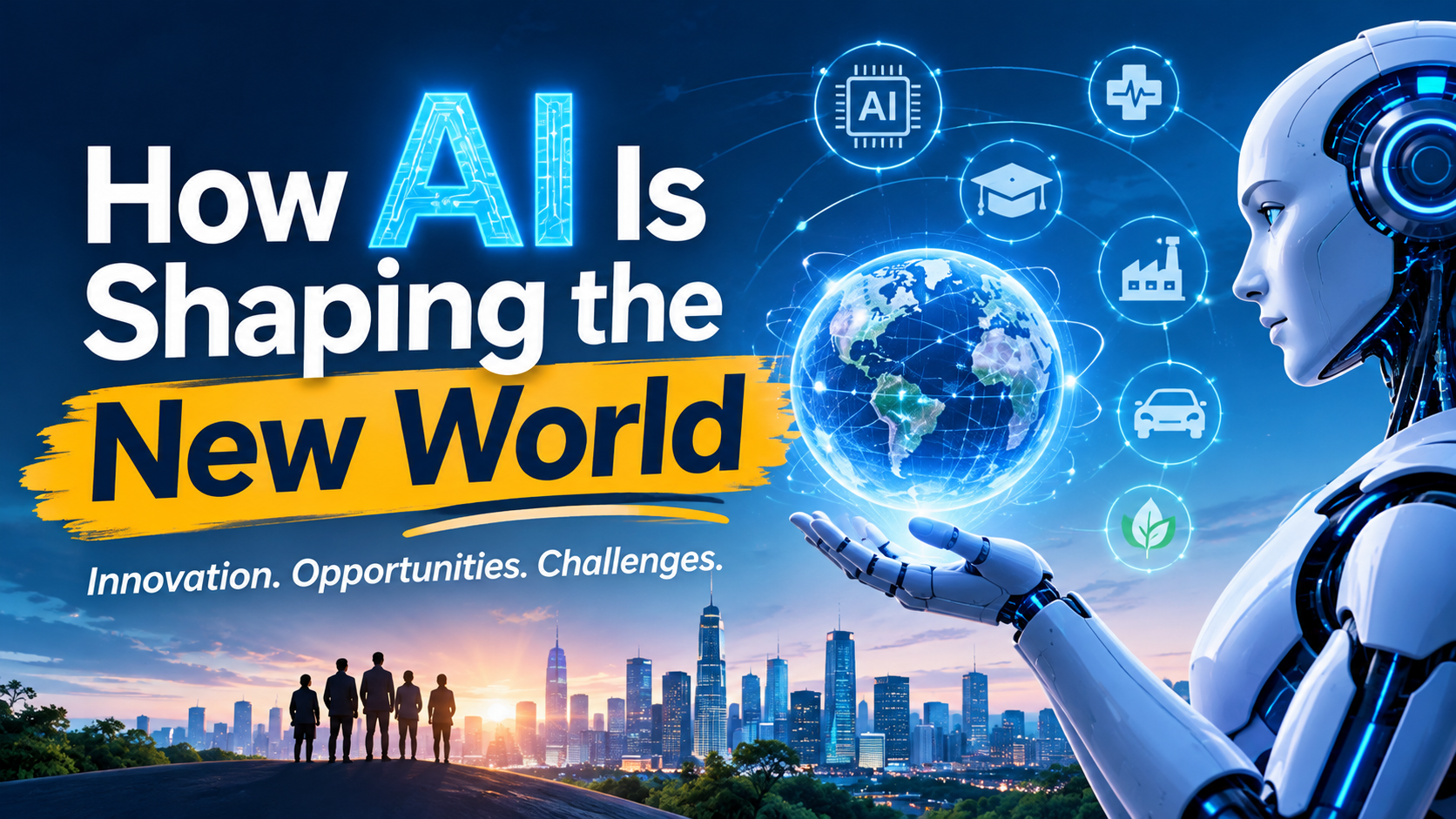
Artificial intelligence is reshaping healthcare by helping professionals make faster, more informed decisions and enabling patients to access more connected, personalized care. From advanced diagnostic tools to remote consultations and data-driven treatment planning, AI is becoming an important part of the modern healthcare ecosystem.
AI and the Evolution of Healthcare
Healthcare organizations around the world are adopting artificial intelligence to improve clinical accuracy, streamline administrative processes, and strengthen the patient experience. AI-powered systems can process large volumes of medical information, identify patterns that may be difficult to detect manually, and support healthcare professionals in delivering timely care.
While AI does not replace the expertise, judgment, or empathy of qualified medical professionals, it can serve as a valuable tool for improving efficiency and supporting evidence-based decision-making. Its impact can be seen across hospitals, clinics, laboratories, research institutions, and digital health platforms.
Improving Diagnostics Through Intelligent Technology
One of the most significant applications of AI in healthcare is diagnostic support. Machine learning systems can analyze medical images, laboratory findings, patient histories, and clinical notes to help identify potential health concerns at an earlier stage.
Medical imaging tools can assist specialists in reviewing X-rays, CT scans, MRI scans, and other images.
Predictive models can help identify patients who may be at higher risk of certain conditions.
Clinical decision-support systems can provide relevant information based on a patient’s symptoms and history.
Automated analysis can reduce the time required to review large sets of diagnostic data.
Earlier detection can lead to more timely intervention, improved treatment outcomes, and more effective allocation of healthcare resources. However, diagnostic AI must be used responsibly, with appropriate clinical oversight, data validation, and patient safety measures.
Telemedicine and Connected Patient Care
Telemedicine has expanded access to healthcare by allowing patients and providers to connect remotely. AI can enhance these digital healthcare services by supporting appointment triage, symptom assessment, patient communication, and follow-up care.
For patients in remote communities, individuals with limited mobility, and people managing long-term health conditions, virtual care can provide a practical alternative to unnecessary in-person visits. AI-enabled platforms can also help healthcare teams monitor patient information between appointments and identify when further attention may be required.
Benefits of AI-Enabled Telemedicine
Improved access to care for patients in underserved or remote locations.
More efficient scheduling, triage, and administrative support.
Better continuity of care through digital follow-up and monitoring.
Greater convenience for patients managing routine consultations.
Enhanced communication between healthcare providers and patients.
Personalized Treatment and Precision Medicine
Every patient has a unique medical history, genetic profile, lifestyle, and response to treatment. AI can help healthcare professionals evaluate these complex factors and develop more personalized care plans. This approach, often referred to as precision medicine, aims to move beyond one-size-fits-all treatment models.
By analyzing relevant patient data, AI can help identify treatment options that may be more suitable for an individual’s condition. It can also support medication management, assist with monitoring treatment progress, and help clinicians recognize potential complications earlier.
Personalized care has particular potential in areas such as oncology, cardiology, chronic disease management, and genetic medicine. As healthcare data becomes more comprehensive and responsibly managed, AI may continue to support more targeted and effective interventions.
Optimizing Healthcare Operations
In addition to clinical applications, AI can help healthcare organizations improve operational performance. Hospitals and medical facilities often manage complex workflows involving patient admissions, staffing, inventory, documentation, billing, and resource planning.
Intelligent systems can assist with forecasting demand, reducing administrative workloads, and improving the coordination of care. When implemented effectively, these tools can allow healthcare professionals to spend more time focused on patients and less time on repetitive administrative tasks.
Operational Areas Supported by AI
Patient scheduling and appointment management.
Hospital capacity and bed utilization forecasting.
Clinical documentation and data organization.
Supply chain and inventory management.
Fraud detection and claims processing support.
Workforce planning and resource allocation.
Responsible Innovation and Patient Trust
As AI becomes more widely used in healthcare, ethical implementation is essential. Patient privacy, data security, transparency, fairness, and accountability must remain central to every AI initiative. Healthcare providers and technology developers must ensure that systems are carefully evaluated, monitored, and used in ways that protect patient rights.
It is also important to address potential bias in healthcare data. AI systems are only as reliable as the information used to train and assess them. Diverse datasets, rigorous testing, and ongoing human oversight are necessary to help ensure that AI tools support equitable care for different communities.
The Future of Healthcare Innovation
The future of healthcare will increasingly depend on collaboration between clinicians, researchers, technology specialists, policymakers, and patients. AI offers substantial opportunities to improve diagnostics, expand access to care, personalize treatment, and create more efficient healthcare systems.
Healthcare forums, professional events, and industry discussions play an important role in advancing this progress. They bring together experts who can share research, explore practical applications, discuss regulatory standards, and identify solutions to emerging challenges.
By combining medical expertise with responsible technological innovation, the healthcare sector can build a future that is more proactive, accessible, efficient, and patient-centered.